
Questioned Document Examination Services
Meyer Questioned Document Examination provides independent forensic examination of handwriting, signatures, and documents for matters involving disputed authorship, authenticity, alteration, and other questioned-document issues.
Services are available to attorneys, businesses, organizations, and private clients. Each examination is approached objectively, with conclusions based on the evidence presented for examination.
Signature Authentication
When a signature is disputed, it can be compared with known genuine signatures to evaluate whether it was written by the same person.
The examination involves much more than simply deciding whether signatures look alike. No one signs their name exactly the same way every time. Known signatures provide examples of the writer's natural variation and recurring habits, which can then be compared with the questioned signature.
The examination considers features throughout the writing, including how strokes and letter forms are constructed, the quality and movement of the writing, and the relationships between different parts of the signature. Similarities and differences are evaluated together, rather than relying on any single feature.
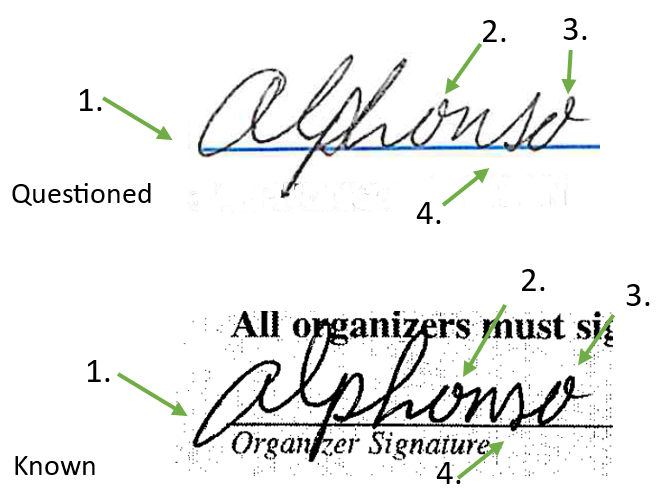
Example of selected features observed during the comparison of a questioned signature with known writing.
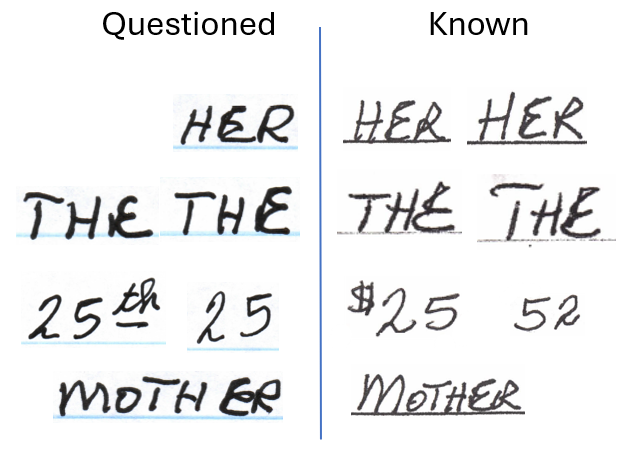
Example of recurring writing characteristics observed in questioned and known handwriting.
Handwriting Identification
When the authorship of handwriting is questioned, the writing can be compared with known samples from one or more possible writers to evaluate whether they were written by the same person.
Handwriting is made up of habits developed over time. While a person's writing naturally varies, recurring characteristics can appear throughout different words, letters, numbers, and combinations of writing. Examining multiple examples helps establish which features are habitual and which may simply represent normal variation.
Comparisons may involve anonymous notes, letters, entries on documents, forms, envelopes, records, or other handwritten material. Writing that appears to have been deliberately disguised can also be examined.
Beyond Handwriting and Signatures
Questioned document examination can involve more than determining who wrote or signed a document. Documents may also be examined for alterations, erasures, additions, indented writing, and other features that may not be readily apparent through ordinary observation.
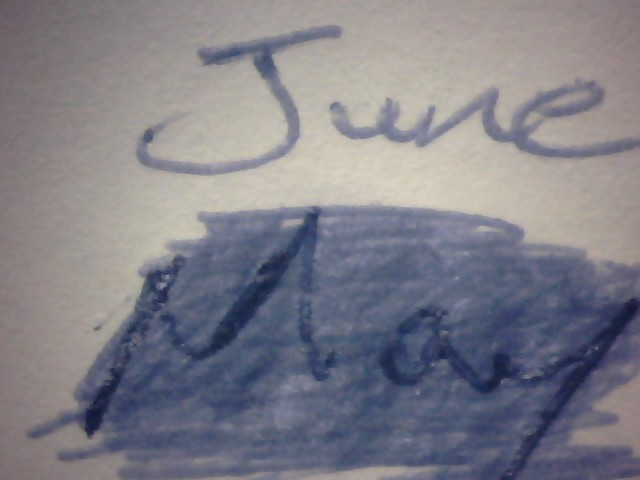
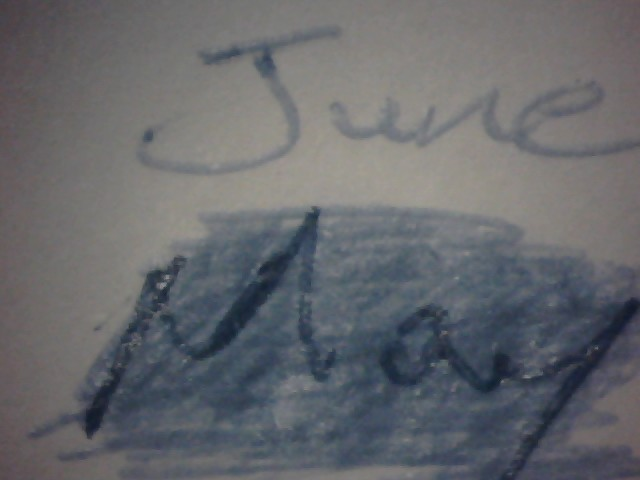
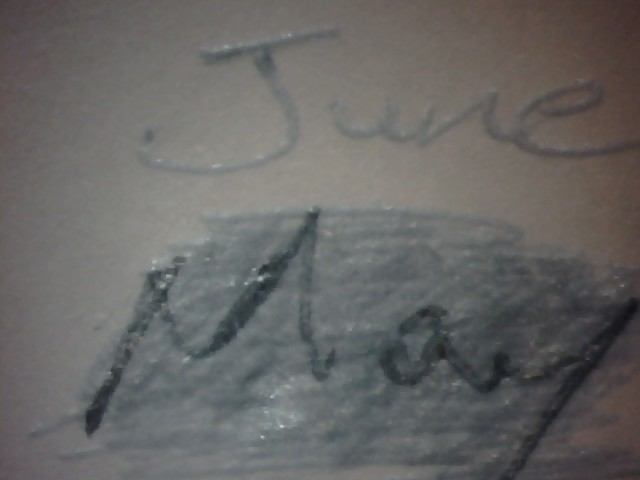
Specialized lighting and imaging techniques can also help reveal obscured or obliterated writing. Depending on the inks involved, infrared examination can reduce the visibility of the obscuring ink while the underlying writing remains visible, as demonstrated here.
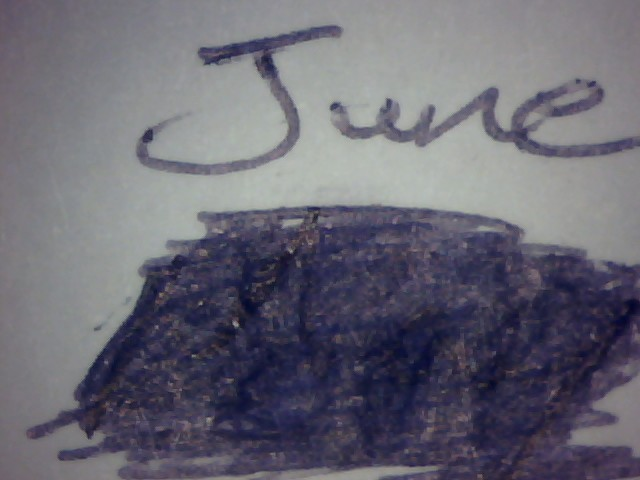 Normal Light
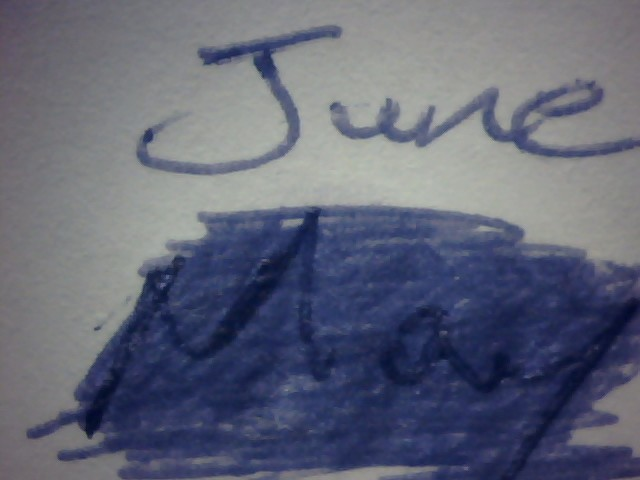
 Infrared
Progressive infrared examination of obliterated writing.
“Mr. Meyer provided quality document examination services, was responsive and easy to work with, and ultimately, contributed to a meaningful resolution of the case. I highly recommend him.”
Support Throughout the Case
Services can extend beyond the examination itself, from initial consultation through reporting, review of another examiner's work, and expert testimony.
Case Consultation
Questioned document issues can arise at different stages of a case. Consultation can help determine what may be examined, what comparison material is needed, and whether additional documents could be useful.
Consultation is also available as a case develops to discuss examination findings, newly discovered documents, opposing expert opinions, or other questioned document issues.
Written Opinions & Reports
Following the examination, the findings and resulting opinion are ordinarily provided verbally, either in person or by phone. This provides an opportunity to discuss the results and answer questions about the examination.
If a formal written report is needed, one can be prepared upon request following consultation. The report documents the materials examined, the examination conducted, and the opinion reached.
Report Review, Critique & Rebuttal
Has your opposition hired a handwriting expert? Reports and opinions prepared by another examiner can be independently reviewed along with the underlying questioned and known material, comparison charts, photographs, or other supporting materials that are available. The review may consider the examination methods used, the observations reported, and whether the stated conclusions are supported by the materials provided.
When reviewing another expert's report, MeyerQDE may agree with some or all of the findings. Any opinions reached are based on the evidence presented.
Deposition & Court Testimony
In cases involving disputed handwriting or signatures, the findings of a qualified handwriting expert can become an important piece of the evidentiary record. When testimony is required, the examiner can explain the examination methods, observations, and opinions in deposition or court. This may include discussion of the documents examined, the basis for the opinion reached, and the significance of features observed during the examination.
The role of the examiner remains the same whether working privately with retaining counsel or testifying before the court: to communicate the findings and opinions accurately and objectively.
Have a Questioned Document Matter?
If you have a disputed signature, questioned handwriting, altered document, or another document issue, contact MeyerQDE to discuss the matter and determine whether an examination may be appropriate.